The United States Army 32nd Field Hospital in the Italian
Campaign of World War II
Lieutenant
General Mark Clark's Legacy in the Italian Campaign
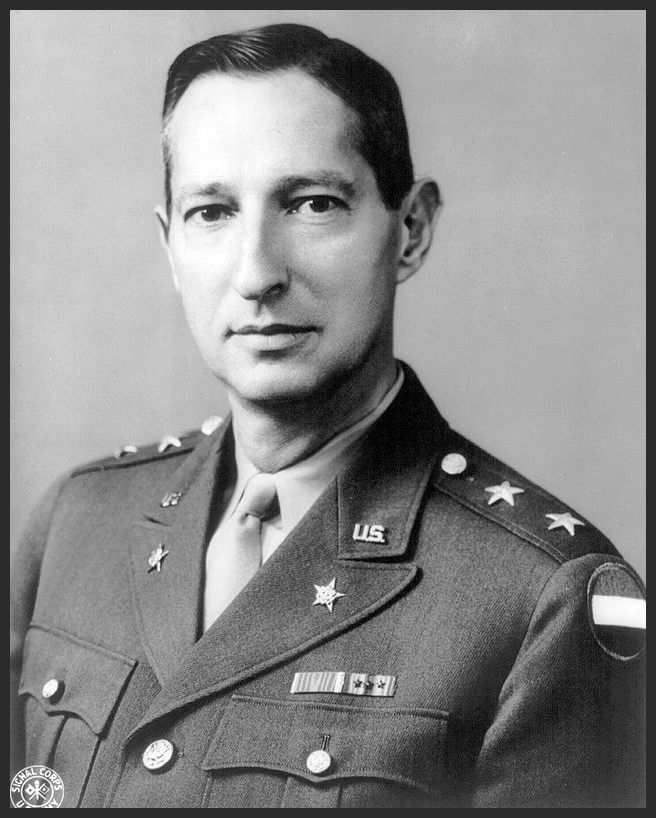
General Mark Clark was highly regarded by key figures like
Winston Churchill, who nicknamed him the "American
Eagle", and General Dwight D. Eisenhower,
who considered him a "brilliant staff officer" and a master of military
training.
Core Leadership Strengths
-
Organizational & Training Genius: Before the Italian Campaign,
Clark played a massive role in building the modern U.S. Army. He was
instrumental in planning the Louisiana
Maneuvers, which were critical for training the millions of
soldiers needed for WWII, and he helped lay the logistical groundwork
for Operation
Torch (the invasion of North Africa).
-
Personal Bravery: Clark led from the front and was awarded the Distinguished
Service Cross for his actions at Salerno. He frequently visited
the front lines and had several narrow escapes, including a secret
submarine mission to Algeria and multiple incidents where his transport
was fired upon or nearly crashed.
-
High Morale & Inspiration: He
was noted for his ability to inspire his troops during difficult
periods. His DSC citation specifically mentioned his "infectious spirit
of determination and courage" during the chaotic days of the Salerno
landings.
-
Advocate for Diverse Units: Clark was a staunch supporter of
the Nisei
(Japanese-American) soldiers of the 100th Battalion and 442nd
Regimental Combat Team. He fought to keep them in his command and
famously wrote them a farewell letter expressing his immense pride in
their "superb job".
However,
General Mark Clark is often criticized as a poor commander due
to his perceived prioritization
of personal glory over strategic objectives, a trait that some
historians argue prolonged the war in Italy. While his supporters point to
his personal bravery and the difficult terrain he faced, several specific
failures and controversies define his negative reputation.
Major Strategic Failures & Controversies
-
The Liberation of Rome vs. Trapping the German 10th Army: This is
the most significant indictment against Clark. In June 1944, he disregarded
orders from his superior, General
Harold Alexander, to cut off the retreating German 10th Army at
Valmontone. Instead, Clark redirected his forces to capture Rome first to
ensure he was the "liberator" of the city. This allowed thousands of German
troops to escape and reinforce new defensive lines, leading to months of
additional fighting.
-
The Battle of the Rapido River: Clark ordered the 36th
(Texas) Division to attempt a near-impossible crossing of the
Rapido River in January 1944 against heavily fortified German positions. The
operation was a disaster, resulting in massive Allied casualties for almost
no gain. After the war, the division’s veterans unsuccessfully petitioned
Congress to investigate Clark for his role in the "botched" crossing.
-
The Anzio Beachhead: While the landing at Anzio was a strategic
attempt to bypass the Gustav Line, Clark was criticized for failing to push
his subordinate, Major
General John P. Lucas, to act more aggressively. This caution
allowed the Germans to pin Allied forces in a "death trap" on the coastal
plain for months.
Personality & Leadership Style
-
Egotism and "Glory Hunting": Clark was nicknamed "Marcus Aurelius
Clarkus" by cynical subordinates due to his perceived arrogance and
obsession with public relations. He was famously accompanied by a large
group of photographers and reportedly only allowed them to shoot his "good
side".
-
Anglophobia: Clark harbored a deep distrust of his British allies,
which complicated the essential cooperation needed in the multi-national
Italian theater. He often felt he was in competition with the British 8th
Army to reach objectives first.
-
Inexperience: As the youngest Lieutenant General in the U.S. Army
at the time, some argued he had been promoted too rapidly and lacked the
operational maturity required for such a complex campaign.
Return to
Main Page
© Copyrighted 2007 by Darrel R Hagberg.
All rights reserved. Moline, Illinois U.S.A.
March 17, 2007 - Updated April
7, 2026
Contact
darrelrhagberg@gmail.com for more
information