History of the 32nd Field Hospital in the Italian Campaign
This site is dedicated to the men and women who served in the United States Army 32nd Field Hospital during the Italian Campaign of World War II. This site hopes to re-create and preserve the history and legacy of the 32nd Field Hospital that served in the Italian Campaign of World War II and in the Pacific Theater toward the end of the war with Japan. Information for this site comes from those who served, their family members, available documents, diaries, letters, and war histories. Many records concerning the 32nd Field Hospital personnel were destroyed in the Great National Archives fire in St. Louis in 1973. This tragic catastrophic fire destroyed most of the records of service men and women who served in the war. Their service record can be restored here with the help of friends and family. See the menu below for more information concerning the fire.
The mission of the 32nd Field Hospital was to provide medical support during combat operations against the Germans in Italy during the war. They served with distinction in the Fifth Army in the Medical Section of IV Corps.
Almost a month after the allies secured Sicily; they began their invasion of Italy, with the first landing at Salerno on 9 September 1943. The landing, commanded by General Mark Clark, met little resistance in most areas, but the Germans put up a fierce fight in a few pockets and prevented the allies from moving off the beaches. The allied invasion eventually stalled and heavy fighting ensued. However, the Germans were unable to bear the allied air attacks and began to withdraw on 16 September 1943.
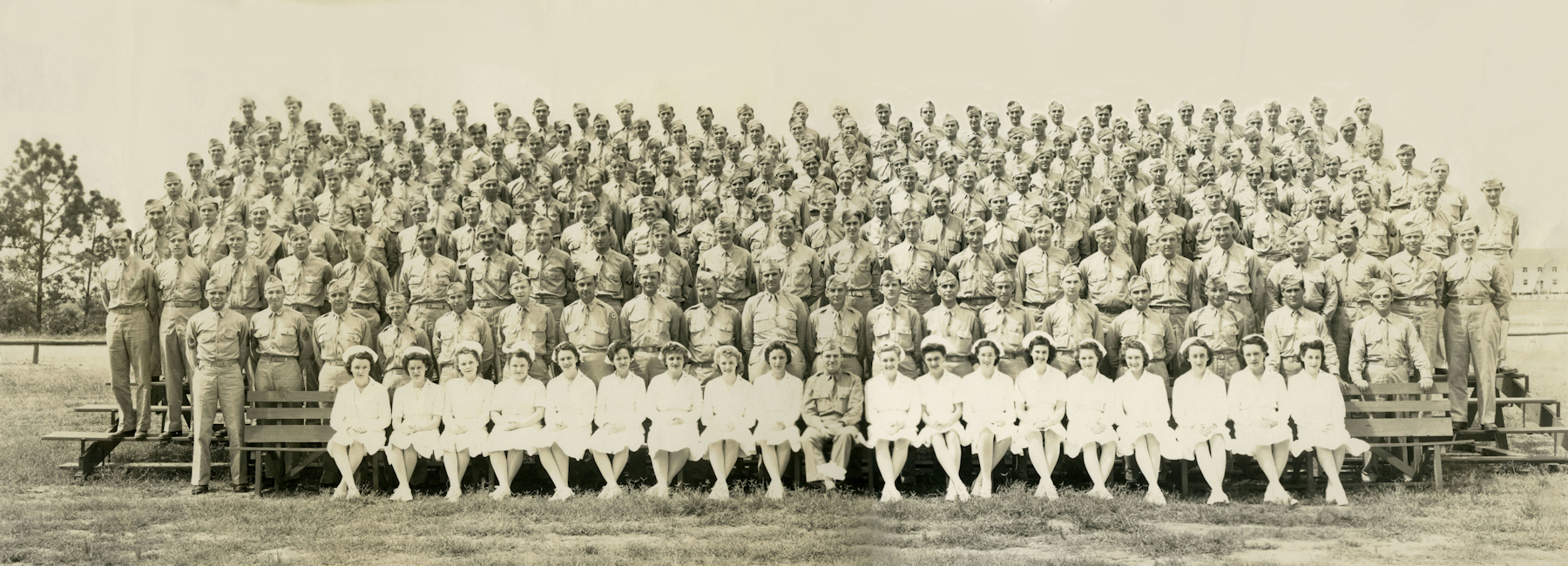
Members of the 32nd the Field Hospital Unit at Camp Rucker in Alabama prior to joining the 5th Army in Italy. The photo was taken in early spring 1943. It measured approximately 24 inches by 8 inches. See the menu below for larger detail photos taken from this photo.
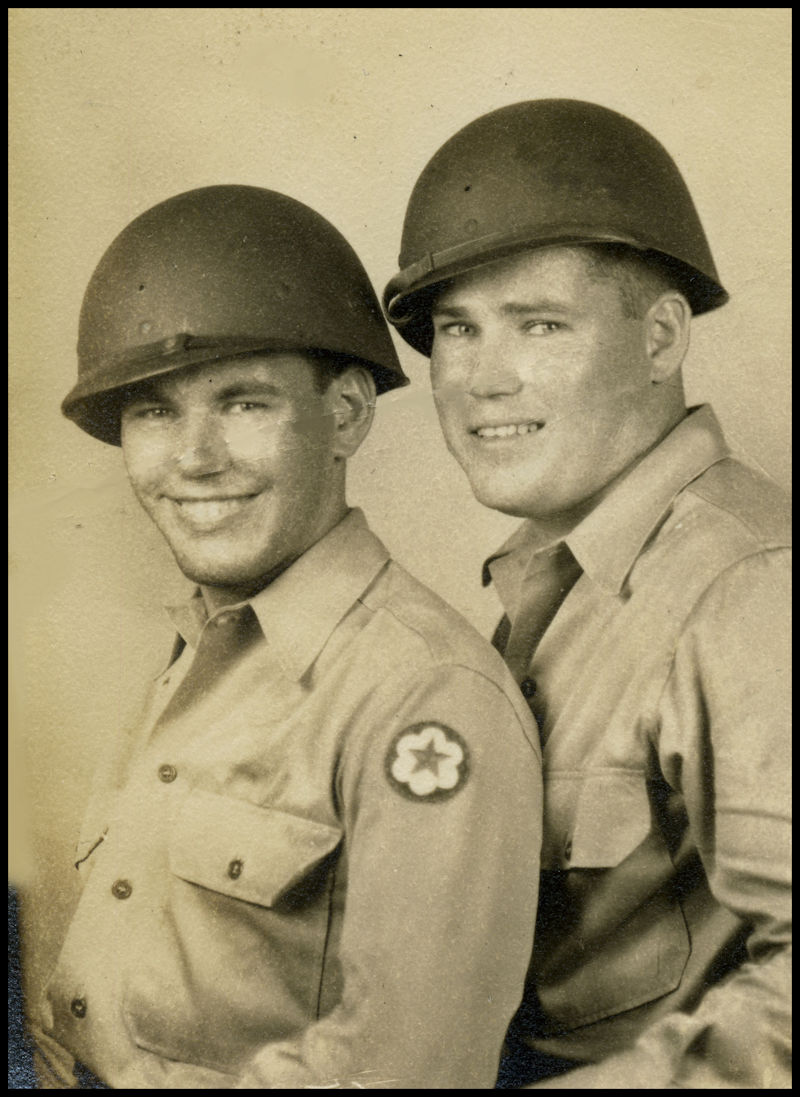
Sergeant Steve Kacsor (left) from Michigan and Sergeant Irvin McLaughlin (right) from Illinois. Sergeant's Kacsor and McLaughlin served together in the 5th Army 32nd field Hospital during the Italian Campaign from 1943 - 1945. Steve was from Owasso, Michigan, and Irvin was from Moline, Illinois. Both survived the war and became life long friends after the war. Both married and had children. Steve had 3 children and Irvin had 5.
Many of the photographs in this site were taken by Staff Sergeant Irvin W. McLaughlin using his Kodak Folding Camera during his tour of duty in Italy from September 1943 through September 1945. Sergeant McLaughlin kept a photo journal during his service in the entire campaign. To see it, go to the menu below.
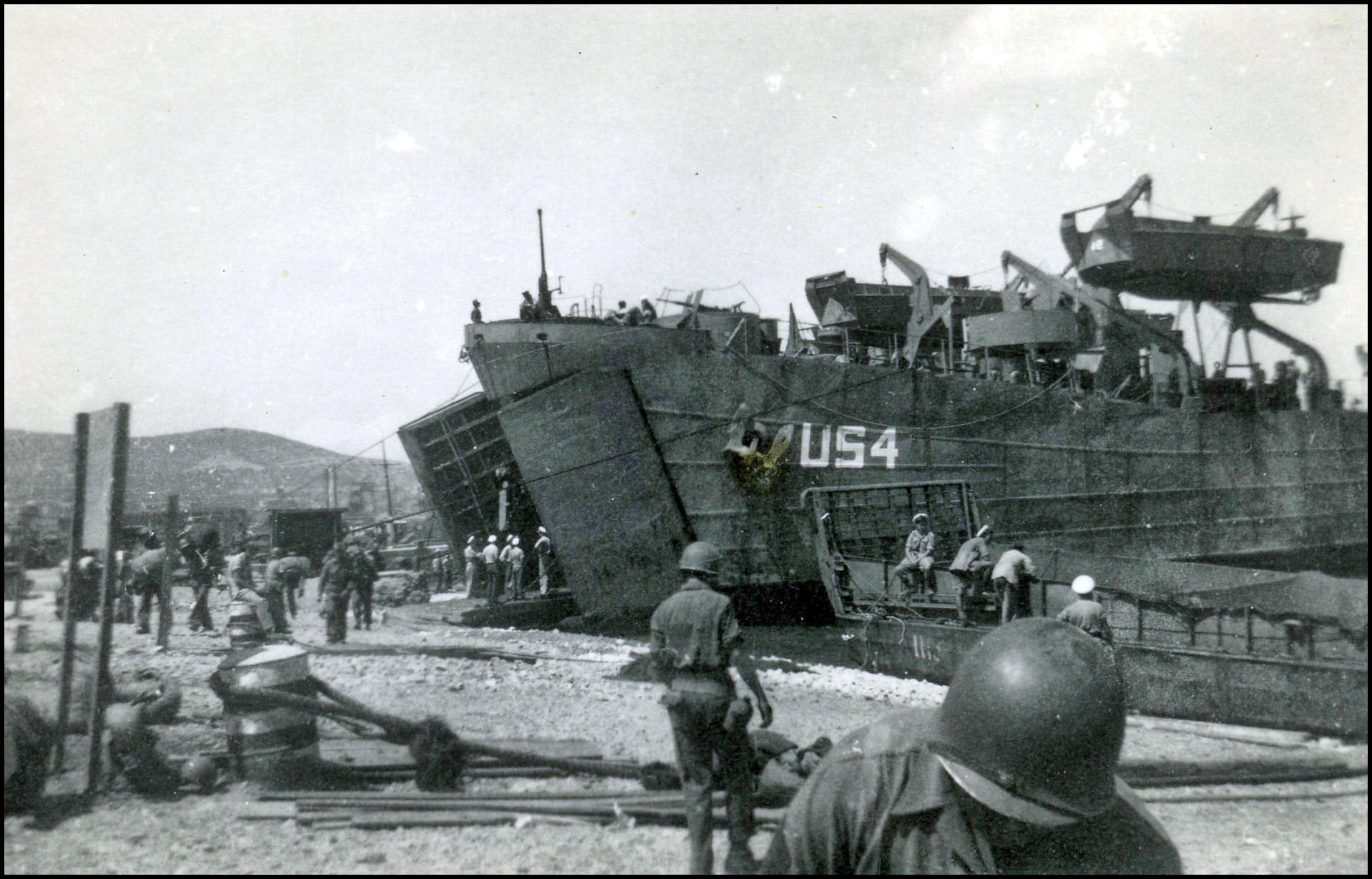
32nd Field Hospital embarkation at Agropoli, near Salerno, Italy, 20 July 1944.
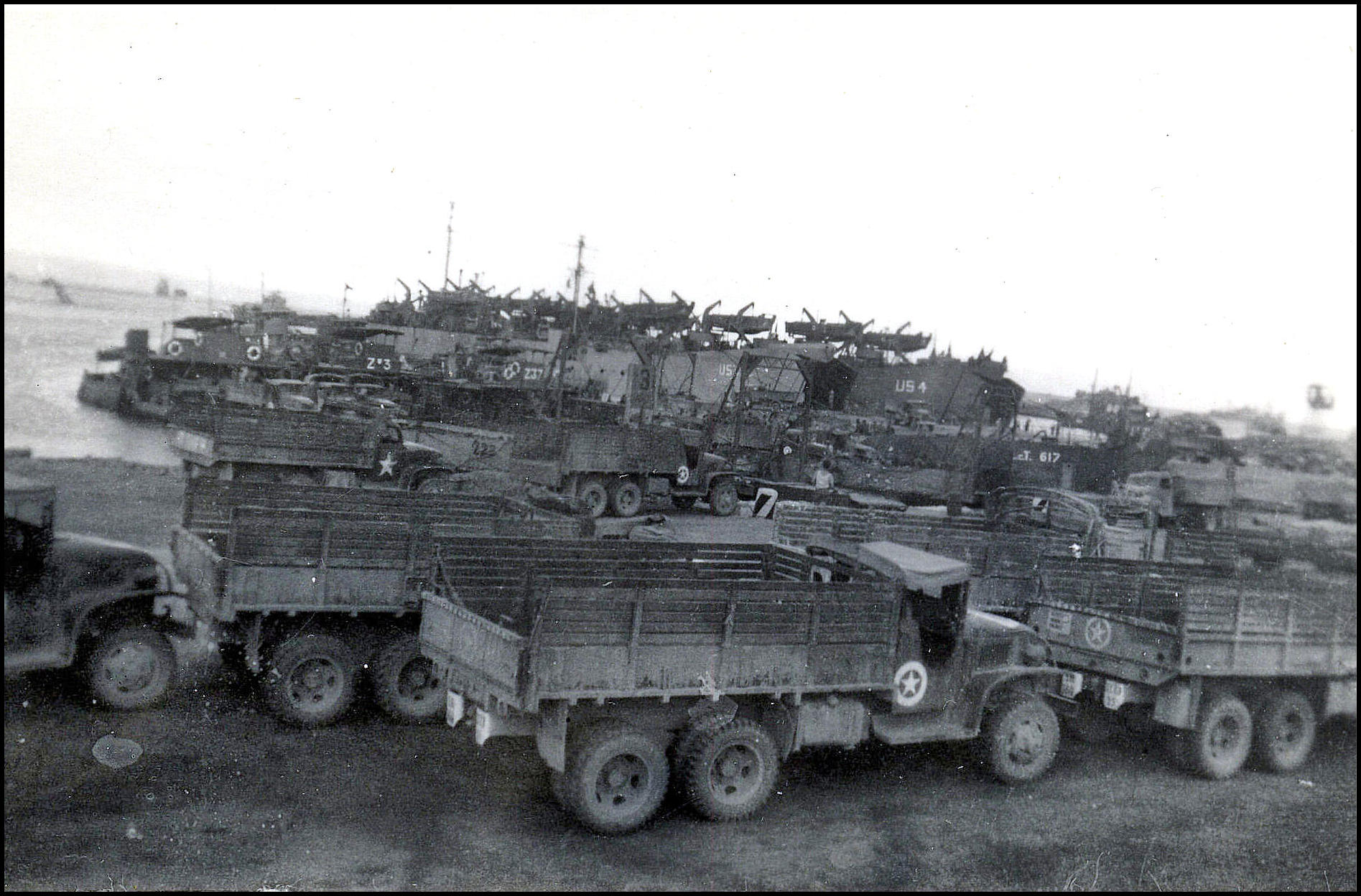
32nd Field Hospital embarkation at Agropoli, near Salerno, Italy, 20 July 1944.
Special thanks to T/5 Hyman E. Matza for providing detailed information on the key movements of the 32nd Field Hospital during World War II. He work with Darrel Hagberg for many years on this website before his passing in the Bronx, New York in 2022.
Thanks to Gary Marchessault for providing a complete list of members of the 32nd Field Hospital as of December 25, 1943. His father, PFC George Marchessault, served in the 32nd. Gary submitted a Christmas Menu Booklet showing these members.
© Copyrighted 2007 by Darrel R Hagberg. All rights reserved. Moline, Illinois U.S.A.
March 17, 2007 - Updated April 7, 2026
Contact darrelrhagberg@gmail.com for more information